
Insect Control in Green Bay: Handling Fall Invaders Like Box Elder Bugs and Cluster Flies
September 18, 2026
Fall insect control in Green Bay comes down to sealing the outside of your house before the first cold snap, because once box elder bugs and cluster flies are inside your walls, spraying them is the slowest and least effective way to get rid of them. Every autumn the same thing happens across Brown County, WI. A warm afternoon follows a cold night, the south and west walls of your house soak up the sun, and thousands of insects that spent the summer outdoors decide your siding is the best place in the neighborhood to spend the winter.
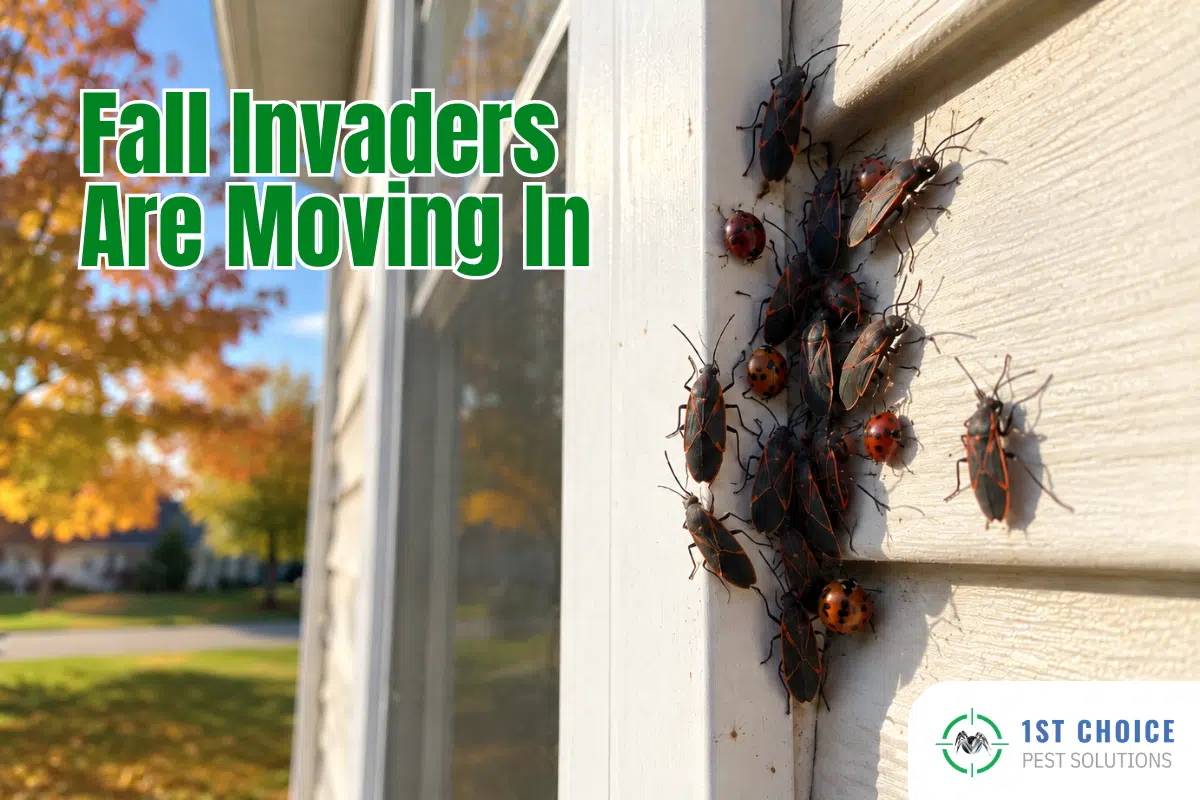
Homeowners usually call us in one of two moments: the day they see a carpet of orange and black bugs on the sunny side of the garage, or the afternoon in February when sluggish flies start appearing on the windowsills of an upstairs bedroom. Both calls are about the same problem. The difference is just how far along it is.
What Fall Invaders Actually Want
Cold-blooded insects cannot survive a Wisconsin winter out in the open, so they look for a sheltered gap that stays above freezing. That gap is almost always your house. Overwintering insects are not feeding, breeding, or building nests indoors. They are simply looking for a crack that leads somewhere dark and protected, and they will take the first one they find.
Sunlight is the signal they follow. On a bright October day, the south and west sides of a building can run noticeably warmer than the air around them, which draws insects to those walls in huge numbers. From there they work their way toward any opening: a gap behind loose siding, a torn window screen, an unsealed spot where a cable or dryer vent passes through the wall, a soffit that has pulled away, or the tiny channel around an old window frame.
The Usual Suspects Around Green Bay
Four insects account for most of the fall invader calls we take in northeast Wisconsin. They look different and behave differently, but they all get inside the same way.
Box elder bugs are flat, black, and marked with red or orange lines. They mass together in the sun, sometimes by the hundreds, on walls, foundations, and the trunks of box elder and maple trees.
Cluster flies are larger and slower than a house fly, with a dull gold sheen on the body. They earn their name honestly. They gather in wall voids and attics in loose clusters, then drift into living space one or two at a time all winter long, usually near windows.
Asian lady beetles look like ladybugs but come in shades from pale orange to deep red, often with a small dark marking behind the head. They can bite, they leave a yellow stain when they are crushed, and they have an unmistakable smell.
Brown marmorated stink bugs are shielding shaped and mottled brown. They are the newest arrival of the group in Wisconsin, and they release an odor when disturbed or vacuumed.
| Insect | What You Notice First | Where They Gather | Season You See Them |
|---|---|---|---|
| Box elder bug | Black bugs with red lines massing on sunny walls | Siding, foundation, window frames, wall voids | September to October outside, again in spring |
| Cluster fly | Slow large flies on upstairs windows | Attics, wall voids, unused rooms, window sills | Late fall through March |
| Asian lady beetle | Orange beetles indoors, staining and odor | Attics, ceiling corners, light fixtures, window tracks | October, then warm days all winter |
| Stink bug | Shield shaped brown bugs, strong odor | Curtains, closets, storage rooms, wall voids | October through early spring |

Why Spraying Alone Disappoints You in October
Most people reach for a can of spray from the hardware store, and that is a reasonable first instinct. The problem is arithmetic. A can treats the bugs you can see, and the bugs you can see are a fraction of the population sitting behind your siding at that moment. You knock down a few dozen and another few hundred move in by the weekend.
Interior spraying causes a second problem. Insects that die inside a wall void do not disappear. They stay there, and in an attic or a wall they become food for carpet beetles and other secondary pests, which is how a fall fly problem quietly turns into a spring beetle problem. This is why our technicians treat the exterior and seal the entry points rather than fogging the inside of a home.
Timing is the other half of it. A treatment applied to the outside of a building in late September, or early October meets the insects while they are still gathering on the walls, before they have moved into the structure. The same product applied in December, after everything is already inside, has very little to work with.
The Exclusion Work That Actually Keeps Them Out
Exclusion means closing the openings insects use. It is unglamorous, it takes an afternoon or two, and it does more for a fall invader problem than any product on the market. Here is what is worth checking on your own home:
- Window and door screens, including the frames. A screen with a small tear or a bent corner is an open door for a cluster fly.
- Weather stripping and door sweeps, especially on the garage service door and any door that has settled over the years.
- Gaps where utilities enter the house: the dryer vent, the air conditioner line set, cable and electrical penetrations, and outdoor faucets.
- Soffits, fascia, and the gap where the roof line meets the wall, which is the most common attic entry for cluster flies and lady beetles.
- Loose or lifted siding, particularly on the south and west walls.
- Foundation cracks and the gap around basement windows and window wells.
- Attic and crawl space vents, which need intact screening rather than a cover that blocks airflow.
Caulk, foam, and copper mesh handle most of these. If you are comfortable on a ladder and you know where to look, a weekend of sealing will cut your fall invader numbers substantially. If reaching the soffit line is not realistic, that is the point where a professional inspection earns its keep.
“I’d say window trim/casing and the gaps where the window meets the siding are some of the most common entry points I see for cluster flies and box elder bugs this time of year. For sealing, I use quality exterior silicone”Steve D., Service Technician, 1st Choice Pest Solutions
“Around doors and windows”Matt N., Service Technician, 1st Choice Pest Solutions
What a Professional Fall Treatment Looks Like
A fall insect control visit from 1st Choice Pest Solutions starts with an inspection of the exterior, because we cannot solve an entry problem we have not found. The technician walks the building, notes the sun-exposed walls where insects are staging, and identifies the gaps they are using.
Treatment follows the inspection. We apply a targeted exterior product to the areas where overwintering insects gather, concentrating on the warm walls, the eaves, the window and door frames, and the foundation line. Attic and soffit areas get attention when the inspection shows insects are already using them.
Documentation closes out the visit. You get a written record of what was treated and a list of the entry points we found, so you know what to seal and where. Our residential pest control program covers fall invaders as part of regular service, which matters because these insects come back to the same buildings year after year. A house that drew box elder bugs last October will draw them again this October unless something changes on the outside of the building.
Fall Invaders Are Not the Only Thing Moving Indoors
Insects are the visible part of a larger seasonal shift. The same drop in temperature that sends box elder bugs to your siding sends mice toward your foundation, and a mouse needs an opening only about the width of a pencil. Fall is the season we handle the most rodent control calls across northeast Wisconsin.
Outdoors, voles tunnel under the snow line and chew the base of shrubs and turf all winter, and the damage does not show until the thaw. Cockroach activity also tends to get noticed in fall, because a population that was tolerable in a warm month becomes obvious once everyone is indoors with the windows shut.
The practical takeaway is that a single fall inspection is worth more than four separate emergency calls spread across the winter. While a technician is walking your foundation for insect entry points, they are looking at rodent entry points too. You can see the communities we serve to confirm we cover your area.
Frequently Asked Questions
Do box elder bugs and cluster flies damage my house?
They do not chew wood, eat fabric, or sting. The damage is nuisance and mess: staining from crushed lady beetles, odor from stink bugs, and dead insects accumulating in wall voids and attics, which can attract secondary pests over time.
Will one treatment get rid of them for good?
No single treatment does, because these insects return to the same sun-warmed buildings every year. A fall exterior treatment paired with sealing the entry points is what reduces the numbers season after season. Ongoing service keeps that protection current.
Is it too late to treat once the bugs are already inside?
It is not too late, but the approach changes. Once insects are in the wall voids, the priority becomes removal of what is in living space, sealing the interior openings they use to get into rooms, and scheduling the exterior work for next fall before they arrive.
Should I vacuum the insects I find indoors?
Vacuuming is the best way to remove what you can see, especially for lady beetles and stink bugs that stain or smell when crushed. Empty the canister or bag outside right away, since a bag left inside will hold the odor.
How soon can you come out?
Call us and we will give you the next available date for your area.
Do you treat businesses as well as homes?
Yes. Warehouses, restaurants, apartment buildings, and offices deal with the same fall invaders, usually on a larger scale because of the amount of wall surface and the number of doors. Commercial buildings are typically handled on a scheduled program rather than a single visit.
Get Ahead of the First Cold Snap
The window for fall insect control in Green Bay is narrow. Once nighttime temperatures drop and the insects have finished moving in, you are managing the problem indoors all winter instead of stopping it at the wall. If you saw them last year, you will see them this year.
Call 1st Choice Pest Solutions at (715) 271-2511 or request a free estimate and we will get your home inspected while the exterior work still counts.
Recent Posts
 "]
Exterminator in Eau Claire: How to Compare Local Pest Companies Before You Call [2026]
The honest way to compare an exterminator in Eau Claire is to ask every company the same five questions: who is licensed and insured, who…
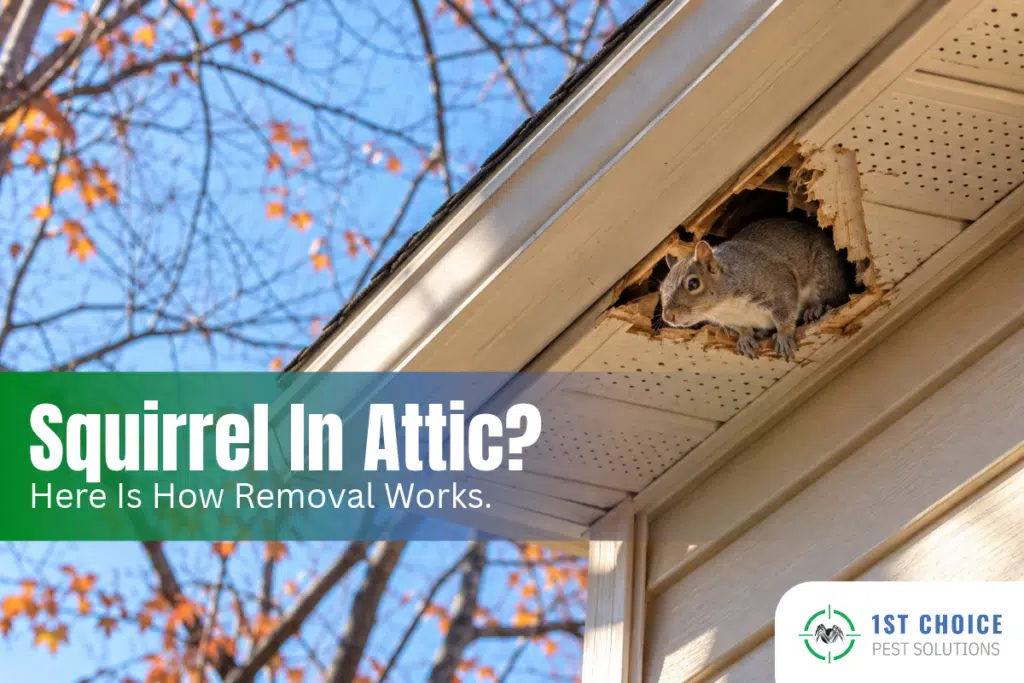 "]
Squirrel in Attic? Why Wisconsin Squirrels Move In Before Winter and How Removal Works
A squirrel in your attic is almost always a female looking for a warm, dry place to spend the winter and raise a litter, and…
 "]
How Much Does Rodent Pest Control Cost in Wisconsin? [2026 Price Guide]
Rodent pest control in Wisconsin is typically priced one of three ways: a one-time treatment, an initial service plus a few follow-up visits, or an…